
Explore IDD and autism health learning pathways designed for practitioners, educators, and advocates. This page provides access to TUFH’s core coursework, partner course offerings, and opportunities to connect with a global Community of Practice. Build practical skills and join others advancing access to health for individuals with intellectual and developmental disabilities and autism worldwide.
TUFH IDD and Autism Health Curriculum

Communities of Practice: IDD Health Course
This course provides a practical foundation for understanding and addressing the complex health and social needs of individuals with intellectual and developmental disabilities (IDD). It examines key issues such as co-occurring physical and mental health conditions, communication barriers, caregiving dynamics, trauma, and inequities in access to care. Learners explore person-centered and trauma-informed approaches, interdisciplinary care models, and system-level strategies that support equitable, respectful, and culturally informed care for individuals with IDD across the lifespan.
Course Modules:
Understanding Intellectual and Developmental Disabilities
Advancing Care for Individuals with Intellectual and Developmental Disabilities (IDD)
Policy, Advocacy and Systems for People with Disabilities and Complex Needs
Navigating Appointments and Interactions
Self Advocacy Tools for Patients, Families, and Caregivers
Trauma Informed Care
The course is offered asynchronously for self-paced learning.
| Curator | Synchronous or Asynchornous | Virtual / In-Person | Course Length | Costs | Targeted |
 | Asynchronous | Virtual | 8 hours – 6 Modules | Content: Free Synchronous sessions and certificate: Requires active TUFH membership* | Practitioners and Faculty |
*TUFH Individual Membership, Institutional Membership, or Member of a TUFH Centers of Excellence
Communities of Practice: Autism Health Course
This course provides a practical foundation for understanding and addressing the complex health and social needs of individuals on the autism spectrum. It examines key issues such as co-occurring physical and mental health conditions, communication differences, sensory sensitivities, caregiving dynamics, and inequities in access to care. Learners explore person-centered and neurodiversity-affirming approaches, interdisciplinary care models, and system-level strategies that support equitable, respectful, and culturally informed care across the lifespan.
The course will be offered asynchronously for self-paced learning or synchronously through live sessions (starting June 2026).
| Curator | Synchronous or Asynchornous | Virtual / In-Person | Course Length | Costs | Targeted |
| Both | Virtual | 8 hours – 6 Modules | Content: Free Synchronous sessions and certificate: Requires active TUFH membership* | Practitioners and Faculty |
*TUFH Individual Membership, Institutional Membership, or Member of a TUFH Centers of Excellence
Partner IDD and Autism Health Courses
If you are interested in suggesting an additional resource for the IDD and Autism Health Community of Practice, we welcome your contributions. Recommending resources is one of the benefits of being a member of TUFH, helping us expand and strengthen our shared knowledge base. To submit a resource or learn more about membership, please contact secretariat@thenetworktufh.org.
The Communities of Practice for IDD and Autism Health is part of The Network: Towards Unity for Health’s commitment to strengthening health systems for the world’s most vulnerable populations. Individuals with intellectual and developmental disabilities and those on the autism spectrum across many regions face social exclusion, stigma, and limited access to essential health and support services. TUFH’s moral mission is to help address these inequities by mobilizing global experts, evidence, and practical solutions.
Through its Global Communities of Practice platform, TUFH convenes specialists, practitioners, researchers, and institutions working in IDD and Autism Health to collaborate on original content, shared learning, and context-relevant action.

TUFH is proud to partner with the Mollie Woods Hare Global Center of Excellence on Neurodivergence (Intellectual Disability and Autism) and Mental Health at the Woods System of Care (WSOC), a global leader in advancing research, training, and care for individuals with intellectual disabilities, autism, and related mental health conditions. The Center’s expertise, research leadership, and commitment to improving outcomes for neurodivergent populations significantly strengthen the depth and impact of TUFH’s Communities of Practice.
Together, this collaboration supports the development of global standards, shared learning resources, and training programs that equip the health workforce with the knowledge and skills needed to provide equitable, person-centered care for individuals with intellectual and developmental disabilities worldwide.
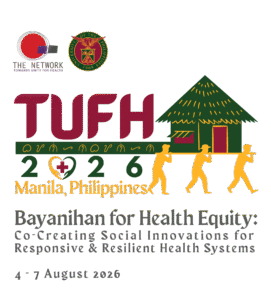
At the TUFH 2026 Conference, a dedicated IDD/Autism/Behavioral Integrated Health Summit will serve as a core component of the program agenda. This global gathering is designed to advance innovative, integrated care and improve outcomes for neurodivergent individuals by bringing together thought leaders, healthcare professionals, policymakers, families, and advocates from around the world. 
The Summit will highlight cutting-edge approaches and practical solutions through keynote addresses, panel discussions, interactive sessions, and collaborative dialogue. Participants will engage with global expertise, explore family-centered and integrated care models, and contribute to shaping strategies that strengthen systems of care and quality of life for individuals with intellectual and developmental disabilities, autism, and behavioral health needs. 
Register for TUFH 2026 today, and be sure to submit an abstract for the IDD/Autism/Behavioral Integrated Health Summit for the opportunity to present and contribute to this global conversation.
Advancing Care for Individuals with Intellectual and Developmental Disabilities (IDD): A Review of Global Guidelines and Practices, Gap Analysis, and Recommendations for Improvement provides a comprehensive, evidence-informed framework for strengthening care systems for individuals with IDD. Grounded in a global review of clinical guidelines, expert consultation, and gap analysis, the paper highlights the complex health and social needs of individuals with IDD, including co-occurring conditions, communication barriers, caregiving demands, and systemic inequities in access to care.
Designed for primary care providers, mental health professionals, social care practitioners, policymakers, and caregivers, the paper outlines key principles of person-centered, trauma-informed, and integrated care. It identifies critical gaps in existing global guidance, including limited culturally relevant frameworks, fragmented care models, insufficient caregiver support, and lack of accessible, up-to-date resources. The paper also emphasizes the importance of inclusive policy development, greater involvement of individuals with IDD and their families, and the need for coordinated, community-based approaches.
Through actionable recommendations, the paper serves as both a practical guide and a strategic roadmap for improving prevention, diagnosis, treatment, rehabilitation, and long-term support systems. It also provides a foundation for training programs and global collaboration efforts aimed at building a more prepared, inclusive, and responsive health and social care workforce for individuals with IDD worldwide.
Advancing Care for Individuals with Autism: A Review of Global Guidelines and Practices, Gap Analysis, and Recommendations for Improvement provides a comprehensive, evidence-informed framework for strengthening care systems for individuals with autism. Grounded in a global review of clinical guidelines, expert consultation, and gap analysis, the paper highlights the complex health and social needs of individuals with autism, including co-occurring conditions, communication differences, sensory sensitivities, caregiving demands, and systemic inequities in access to care.
Designed for primary care providers, mental health professionals, social care practitioners, educators, policymakers, and caregivers, the paper outlines key principles of person-centered, trauma-informed, and integrated care. It identifies critical gaps in existing global guidance, including limited culturally relevant frameworks, insufficient inclusion of the perspectives of individuals with autism, fragmented care across the life course, inadequate support for adults, and barriers related to accessibility, affordability, and system navigation. The paper also emphasizes the importance of inclusive policy development, stronger communication-focused approaches, and greater coordination across health, social, and community-based systems.
Through actionable recommendations, the paper serves as both a practical guide and a strategic roadmap for improving prevention, early identification, diagnosis, treatment, rehabilitation, and long-term support systems. It also provides a foundation for training programs and global collaboration efforts aimed at building a more prepared, inclusive, and responsive health and social care workforce to support individuals with autism worldwide.
Resource Library
If you are interested in suggesting an additional resource for the IDD and Autism Health Community of Practice, we welcome your contributions. Recommending resources is one of the benefits of being a member of TUFH, helping us expand and strengthen our shared knowledge base. To submit a resource or learn more about membership, please contact secretariat@thenetworktufh.org.