
The Social Accountability Fellowship is a collaboration to advance Impact, Accreditation, and Leadership by The Network: TUFH and NOSM University.
The purpose of the 2026 Social Accountability Fellowship is to explore the establishment of a TUFH National Center of Excellence within a country or region. TUFH Centers of Excellence (CEs) are parts of institutions such as universities and health institutions focused on health. CEs are an extension of TUFH in specified technical areas according to agreed upon Terms of Reference and a work plan. CEs support research, provide input to inform the development of guidance on TUFH technical areas of expertise.
Please contact Nikolaj Hansen-Turton, TUFH Manager at nikolajhansen-turton@thenetworktufh.org
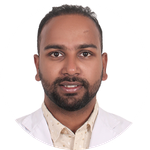
Pukar Gupta
Dr. Pukar Gupta is a passionate healthcare advocate and leader committed to improving public health systems in Nepal. With a background in medical practice and leadership roles, Dr. Gupta is actively involved in shaping health policy and promoting community-based health initiatives. He serves as the Founder & President at National Health Action Force Nepal (NHAFN), where he leads efforts in addressing healthcare gaps, especially in underserved areas. His dedication to health equity drives him to collaborate with multidisciplinary teams to advocate, educate, and transform the health landscape in Nepal.
- Dr. Pradeep Adhikari – Vice President & Community Outreach Head
- Dr. Rika Rija – Mental Health Initiatives & Crisis Intervention Wing Head

Malik Zain Ul Abideen
Dr. Malik Zain ul Abideen (BDS, MME) currently serving as Assistant Professor and Head of the Department of Dental Education & Research at Bakhtawar Amin Medical & Dental College, Multan, Pakistan. A practicing dental surgeon and health professions educationist, he leads curriculum reform, research, assessment, and faculty development activities. His research and scholarly work focus on social accountability, community-engaged education and curriculum alignment, integration of AI and digital learning to ultimately produce competent and culturally competent graduates. He directs workshops and awareness programs that integrate service, research and student learning, and advocates practical, evidence-based methods to prepare graduates for underserved settings. Dr. Zain will serve as College of Dentistry, BAMDC’s lead for the TUFH Social Accountability Fellowship.
- Prof. Dr. Adil Durrani ( Prof. and Head Oral Biology)
- Prof. Dr. Waqar Hussain (Principal and Head of Prosthodontics)


Faiza Salman
Dr. Faiza Salman is a medical educationist and Assistant Professor in the Department of Medical and Dental Education at Rashid Latif Medical College and Rashid Latif Dental College, with expertise in curriculum development, faculty development, and undergraduate student engagement programs. She has contributed to faculty development workshops and scholarly activities at the institutional level. Her career goal is to advance socially accountable health professions education through curriculum reform, faculty development, and community engagement at the national level, with a focus on aligning undergraduate curricula with Pakistan’s population health needs.
- Prof. Dr. Adil Durrani ( Prof. and Head Oral Biology)
- Prof. Dr. Waqar Hussain (Principal and Head of Prosthodontics)

Nadia Ben Mansour
Dr. Nadia Ben Mansour is a Professor of Preventive and Community Medicine at the Faculty of Medicine of Tunis and a public health physician at Charles Nicolle Hospital, Tunisia. Her work focuses on implementation research, and the integration of evidence into health systems and public policy.
She chairs the Committee for Social Accountability at the Faculty of Medicine of Tunis and coordinates innovative initiatives such as the Mobile University Campus, aimed at strengthening community engagement and learning through service. Dr. Ben Mansour is actively involved in international networks including RIFRESS and the Vaccine Impact Modelling Consortium, and is a member of the Francophone Supervisory Committee of the ISAT (Indicators of Social Accountability Tool).
Her research and academic leadership are driven by a strong commitment to equity, partnership, and the societal impact of health professions education.
- Rym Ben Othmen (Associate professor in Nutrition)

Jyotsna Rimal
Dr. Jyotsna (Jo) Rimal is a PhD candidate at School of Medicine and Dentistry, Griffith University, Gold Coast, Australia. Her PhD thesis is related to developing a model for social accountability of medical education. She is also a faculty at School of Medicine and Dentistry, Griffith University. She served B.P. Koirala Institute of Health Sciences, Dharan, Nepal for more than 20 years. Her research work has been cited more than one thousand one hundred times. She has multiple portfolios as an academic leader, an oral health professional, a researcher, an educator, a humanitarian, a public speaker and a life coach.
- Bernadette Sebar, Deputy Head of School, Learning and Teaching, Sujeevi Nawaratna, Lecturer


Paul Worley
Paul Worley, a Rural Generalist doctor and PhD in medical education, is the Executive Director Clinical Innovation of the Riverland Mallee Coorong Local Health Network (RMCLHN) in rural South Australia. Previously Dean of Medicine at Flinders University and the inaugural National Rural Health Commissioner for Australia, he now focuses on the development of the Riverland Academy of Clinical Excellence (RACE).
RACE is an innovative multi-disciplinary division of the RMCLHN that drives the LHN’s commitment to being accountable for training its own sustainable and high-quality workforce locally, contributing through research to a relevant evidence base for care, and creating a culture of clinical improvement throughout the region.
Majda Sebbani
Professor Majda Sebbani is the head of the public health department at the Faculty of Medicine and Pharmacy of Marrakech, Cadi Ayyad University, Morocco. Specializing in health promotion and community-based medical education, her works focus on designing, implementing, and evaluating medical education reforms that strengthen continuity, coordination, and equity of care, with a strong focus on implementation science and contextualization in low- and middle-income settings. She combined field-based public health expertise with educational research to translate health system needs into meaningful curricular and faculty development innovations. Her goal is to contribute internationally to evidence-based, context-sensitive medical education that improves population health and wellbeing.
As researcher and leader, she actively participates in national and international academic networks, contributing to discourse on socially accountable (ISAT committee Member). As a TUFH Fellow, Dr. Sebbani (and her team) engages actively in international collaborations and networks dedicated to socially accountable health professions education.
- Latifa Adarmouch (Professor)
- Samira Essoli (Lecturer)
- Mohamed Amine (Professor)

Peter Maturi Mwamba
Dr. Mwamba is a senior lecturer and head of Hematology and Blood Transfusion at the University of Nairobi. He also works as a consultant hematologist in various hospitals including the Kenyatta National Hospital, which is the premier hospital in Kenya.
Dr. Mwamba is a dedicated professional with expertise in research, leadership, and community development. He is known for his commitment to excellence, evidence-based practice, and capacity building within his field.
Dr. Mwamba has contributed to academic and professional initiatives through research, mentorship, and collaborative work, and he remains focused on advancing sustainable impact and knowledge-driven solutions.


Saaid Said Jama
Dr. Saaid Said Jama is a medical doctor and a FAIMER fellow, currently serving as the Vice Rector for Academics at the University of Health Sciences in Bosaso, Somalia. His research focuses on health professions education and tropical infectious diseases, such as TB, dengue, and HBV.
- Hawa Yusuf Mohamed, Director of Quality Assurance
- Ali Bille Farah, Dean of Postgraduate Studies


Ifeoma Bernadette Ucheh
Ms Ifeoma Bernadette Ucheh, is a Lecturer with over 6 years in community Public Health and Nutrition, currently working in Open University of Nigeria, Abuja. Our organization is driven towards systems that provide health services to grassroot areas and underserved communities. Association of Public Health Teaching and Research Services ( APHTRES) is positioned to deliver on this mandate by being equipped with the manpower and will.
- Mr Peter Joseph Shaba
- Dr Samuel Ekeh
- Dr Emmanuel Ekpa


Wondewosen Tsegaye Sime
Dr. Wondewosen is a Medical Microbiologist with over 20 years of cumulative experience in research, teaching, and academic leadership. He holds MSc and PhD degrees in Medical Microbiology and has served in various universities, teaching, mentoring both undergraduate and postgraduate students. Currently, he is an Associate Professor of Medical Microbiology at St. Paul’s Hospital Millennium Medical College, where he also serves as the Academic Vice Corporate Director (equivalent to the Academic Vice President).
- Dr. Muluken Tesfaye, Provost of St. Paul’s Hospital Millennium Medical College
- Dr. Fantu Abebe, Senior Human Resource Technical Advisor in the Ministry of Health
- Mr. Assegid Samuel, Human Resources Development and Improvement Lead Executive Officer in the Ministry of Health
- Mr. Mohammed Teni, Preservice Education Desk Lead in the Ministry of Health

Sheeba Kunjukrishnan Retnabai
Dr Sheeba is a dedicated medical educator and clinician with qualifications including MBBS, DGO, FAIME Fellow IPE, FAIMER MHPE, and PhD scholar. Currently I am pursuing Chief Sustainability Officer Program by MIT and AI in Healthcare by IIM Calicut.I combine academic rigor with clinical expertise as an OBGYN practitioner and committed academic teacher. Deeply invested in advancing collaborative practic I I am an active IPE practitioner who champions team-based healthcare education. I am a passionate ambassador for Climate Change and Healthcare Sustainability, advocating for environmentally sustainable pracices within health professions education and clinical care.
- Dr Ramya Rathan

Sonia Kumar
Professor Sonia Kumar is the Founding Executive Dean of Medicine at St Mary’s University in London, leading their new School of Medicine, which will welcome its first cohort in September 2026. Prof Kumar has over two decades experience as a GP and educationalist, specialising in community-based health and education for the benefit of society, which will be core to the new School.
Sonia studied Medicine at King’s College London, where she also gained a Bachelor of Science and Master’s degree (distinction), and also holds a Fellowship with the Royal College of General Practitioners. Prior to this role she was the Associate Dean in Community Engagement at the University of Leeds, where she led the university’s civic mission in the city and local region. She established CENTRE (community engagement network in research education and civic engagement) working with colleagues across the university and key stakeholders to maximise the university’s social impact, enabling students to gain key graduate attributes and citizenship skills needed for our future workforce and broader global change.
Professor Kumar worked at the London Deanery and had a 10-year award-winning tenure as the Director of Undergraduate Primary Care Education at Imperial College London. Over this time she won 19 awards for her team including the Imperial Presidents Medal for Outstanding Contribution to Teaching Excellence and the CATE collaborative team award from AdvanceHE. At Imperial she founded MEdIC (medical education innovation and research centre) a research centre focussed on aligning medical education with community priorities and workforce needs.
Over the last 20 years Professor Kumar has worked with numerous national and international collaborators, been an external examiner for University College London and provided external consultancy including the FCDO in Mexico and Pharma. She has published extensively and has been invited to present across the UK and globally, and is a Visiting Professor at Imperial College London, University of Leeds and SBV Pondicherry in India.
- Professor Nick Merrifield, Head of Primary and Community Care

Hanan Abdelrahman
Dr. Abdelrahman is an Assistant Professor at the Manning College of Nursing and Health Sciences, University of Massachusetts Boston. Her research focuses on pain management and the improvement of patient outcomes through evidence-based, patient-centered approaches, with particular attention to underserved populations. Her scholarship advances the design and evaluation of health interventions and nursing education by applying biopsychosocial and community-engaged frameworks. She has a strong interest in social accountability in nursing education, emphasizing curriculum innovation that prepares future nurses to address health inequities, ethical responsibility, and the needs of diverse communities. Her work is grounded in rigorous mixed-methods research that informs both clinical practice and educational innovation.
- Judith M. Paré, PhD, RN – Clinical Professor and RN–BS Program Director, Assistant Professor, Manning College of Nursing and Health Sciences, University of Massachusetts Boston
- Courtenay Sprague, PhD – Associate Professor of Global Health, Department of Conflict Resolution, Human Security, and Global Governance, John W. McCormack Graduate School of Policy and Global Studies& Department of Nursing, College of Nursing and Health Sciences, University of Massachusetts Boston


Varfee Holmes
Varfee Holmes is a seasoned communications professional with over fifteen (15) years of public service experience in public relations, strategic communications, stakeholder engagement, and professional networking. He currently serves as Senior Communications Consultant in the Office of the First Lady of the Republic of Liberia, where he provides strategic leadership in messaging, public engagement, and communications coordination.
He is also the founder of the Rise and Shine Impact Movement (RASIM), an initiative focused on leadership development, youth empowerment, and values-based mentorship. Through RASIM, he leads the Rising Leaders Mentorship Class, offering structured mentorship and leadership training to emerging leaders. He is an advocate for peace, justice and equality.
An experienced public speaker, Mr. Holmes is known for his professionalism, discretion, and commitment to advancing national development through effective communication, leadership, and service.
He is a 2015 graduate of the Cuttington Graduate School where he obtained a masters in Public Sector Management. He is a certified change practitioner trained by Prosci and a leading voice on change and personal development.

Sebastian James Gelderbloem
Sebastian J Gelderbloem is a strategic public-sector leader with over two decades of senior experience across government, academia, and civil society in the health sector. He brings together advanced qualifications in business administration, social science, and biomedical technology with a rare ability to translate complex scientific and policy insights into practical, high-impact solutions.
Currently serving as Deputy Director: Stakeholder Engagement for the Western Cape Department of Health and Wellness’ Metro Health Services, Sebastian leads the development of strategic partnerships that strengthen service delivery within the district through stakeholder engagement and social mobilisation. His work includes the design of an innovative electronic platform to map and monitor health partners, coordination of a Community-Oriented Primary Care (COPC) toolkit, and guidance on stakeholder engagement for major hospital infrastructure projects. In this role, he also supports various aspects of governance and performance improvement. He currently serves on the boards of IAVI South Africa and the National Health Laboratory Services of South Africa.
Previously, Sebastian founded and led the AfrA Foundation, creating youth development and entrepreneurship programmes with exceptional retention and success rates. Internationally, he served as Managing Director of the Aeras Global TB Vaccine Foundation in South Africa, building laboratory and clinical research capacity across Africa and Asia, managing multinational teams, and contributing to global TB vaccine initiatives supported by the Bill & Melinda Gates Foundation. Using his substantial experience and expertise, Sebastian served as a consultant for the Global Health Network. His adoption of a lifelong learning approach has seen him receiving certificates in Global Health, Public Health, Facilitation, Auditing, Public Relations and Project Management from various institutions further adding to his skills to engage and provide input to complex issues.
Sebastian is known for building cross-border partnerships, shaping strategy, and driving measurable outcomes. His career reflects a commitment to collaboration, innovation, and improving health and social systems at scale.
- Stacy-Leigh Strydom


Lobna Ahmed Abdelmeged Elgamal
• Critical care consultant
• Disaster medicine consultant
• Lecturer in disaster medicine diploma- PFA-MOHP-Egypt
• Patient safety fellowship ESCIM-Italy
• Master medical education
• Egyptian health council Certified trainer
• Health care -AI specialist
• T2T\LIM Harvard certified
• ENLS\TOT\MIMMS\HMIMMS\MCM instructor
- Dr Wael Atya Ahmed


Elshazli Fadlallah Ali Sigiron
Elshazli Fadlallah Ali is a medical student from Sudan, currently pursuing his studies at Alfarabi College for Science and Technology. As the sole member and team lead of the SNO-SUDAN initiative, he oversees all aspects of the organization’s operations, from strategic planning to project execution. Passionate about public health and community development, Elshazli is dedicated to advancing medical knowledge, fostering research, and promoting health awareness across Sudan. His leadership combines a strong academic foundation with a commitment to innovation, collaboration, and impactful outreach, aiming to make a meaningful difference in the health sector of his country.


Babra Mendez
Babra Kamusinga-Mendez is a human services leader in the intellectual and developmental disability (IDD) sector and a doctoral learner in Industrial–Organizational Psychology, with research interests in employee engagement, workplace culture, well-being, and retention in healthcare and community-based support roles. In her current Program Director role, she leads multidisciplinary teams delivering person-centered services and strengthening quality, compliance, and continuous improvement across programs. Babra also collaborates with the Center for Disability Information (CDI), contributing to initiatives that expand disability visibility, accessible learning, and inclusive practice.
As a TUFH Fellow, Babra is part of a working team committed to social accountability—aligning partners, listening to community priorities, and translating fellowship learning into measurable action. The team’s shared focus includes making “invisible IDD” visible within health and social systems while building an integrated approach that recognizes interconnected needs across the lifespan. Following the fellowship, the team intends to launch a Center of Excellence that advances IDD visibility and outcomes and also supports broader health priorities (e.g., prevention, access, workforce development, and community-based care) through collaboration, evidence-informed practice, and transparent accountability.

Wasilat Kasim Imam
Wasilat Kasim is a trained microbiologist and an emerging public health advocate with a strong interest in health promotion, community development, and disease prevention. She is passionate about improving health outcomes through education, youth engagement, and evidence-based interventions, particularly in underserved communities. Wasilat has participated in volunteer and advocacy initiatives focused on public health awareness and capacity building, and she is committed to continuous learning and leadership development. As a young professional navigating her early career, she is driven by a desire to contribute meaningfully to collaborative efforts that advance equitable and sustainable health systems.
- Aisha Ahmad salma

Kator David Igbudu
Kator Igbudu is a public health professional with a Bachelor of Science in Public Health from the University of Calabar and a Master of Public Health from the Braun School of Public Health and Community Medicine, Hebrew University of Jerusalem. His work has focused on the design, implementation, and evaluation of HIV and malaria prevention and treatment interventions, with particular attention to translating evidence into practice and policy. Driven by a sustained interest in health policy and governance, he was selected into the second cohort of the Legislative Mentorship Initiative in Nigeria, graduating as the Best Fellow. He is also an alumnus of the Bridges of Science Program at the Weizmann Institute of Science, where he contributed to research on synthetic antimicrobial peptides targeting drug-resistant malaria parasites. He currently serves as Programme Coordinator (Public Health) in the School of Allied Health Sciences, Miva Open University, Abuja, Nigeria.
- Mr. Wuese Simon Jimin
- Mr. Idio Ubong Ifiok
Agussalim
Dr. Agussalim, S.Kp., MSN., DNS is a senior nursing academic and researcher at the School of Nursing, Poltekkes Kemenkes Makassar, Ministry of Health Republic of Indonesia. He holds a Doctor of Nursing Science in Transcultural Nursing, Members of Transcultural Nursing Society, and has more than 20 years of experience in nursing education, clinical practice, research, and academic leadership. His expertise spans medical-surgical nursing, transcultural nursing, community health, and interprofessional education. Dr. Agussalim has published extensively in national and international journals and serves as a reviewer and editorial board member for several peer-reviewed journals. He is also a national accreditation assessor (LAM-PTKes) and an active contributor to international nursing and health education networks.


Mora Claramita
Mora Claramita, MD., MHPE., Ph.D, Professor in Medical Education and Bioethics, and an active general practice/ GP, graduated from Maastricth University, The Netherlands, Masters of Health Professions Education (MHPE) –STUNED Grantee, 2002-2005, PhD in Medical Education, 2012 (NPT Project, U to U Grantee. Currently she is Head of Department Medical, Health Professions Education and Bioethics (1stapp.) Department Family and Community Medicine (2nd app.) During her career she got some awards Lyn Clearihan Award 2019, The Best Lecturer Award – 2017 Awarded by the Faculty of Medicine Universitas Gadjah Mada, Australia Fellowship Awards – 2016 and Fulbright Senior Scholar Award – 2014. Mora is also active as a Project Coordinator for some projects and the author of books related to HPE and primary care physicians. She is now the chair of the Indonesian Collegium of Health Professions Education (I AM HPE)
- Prattama Santoso Utomo
- Titi Savitri Prihatiningsih


Karin Maiwald
Dr. Karin Maiwald (PhD, Maastricht University) is a full-time faculty member in the Faculty of Medicine at The University of British Columbia (UBC), Vancouver campus. In this capacity, she supports medical residents as a part of UBC’s Postgraduate Medical Education (PGME) program at the Kootenay Boundary Site. Doctor Maiwald has an impressive career grounded in health professional education and health services in the province of British Columbia


Areta Idarto
I am a pediatrician and medical educator from Universitas Ciputra School of Medicine, Surabaya, Indonesia, one of the closest academic and healthcare hubs serving Eastern Indonesia. I currently serve as Vice Head of the School of Medicine and International Class Coordinator, with a strong interest in pediatric preventive care, child development and behavior, and community-based health education.
Universitas Ciputra is grounded in the values of integrity, professionalism, and entrepreneurship, which guide our approach to socially accountable medical education. I work collaboratively with a multidisciplinary team that includes experts in clinical microbiology and global health, enabling us to address health challenges from biological, population, and systems perspectives. This combination is particularly relevant in responding to the needs of vulnerable and underserved populations, where infection control, prevention, and health equity intersect.
Through partnerships with healthcare providers, public health authorities, and interdisciplinary academic units, our work focuses on translating education into meaningful action for communities across Indonesia.
- Lidya Handayani, dr., M.Ked.Klin., Sp,MK., PhD
- Maria Cellina Wijaya, dr., MMSc.

Bengü Kahraman Karaca
Dr. Bengü Kahraman Karaca is an Internal Medicine resident and a PhD candidate in Medical Education at Ege University Faculty of Medicine, Türkiye. Her doctoral research focuses on patient safety–oriented instructional design for central venous catheterization via the femoral vein using simulation-based methods. She has contributed a book chapter to Progress Tests in Health Professions Education and has presented her work at international and national meetings including AMEE and ORPHEUS. She has served as an educator and trainer in faculty development, patient safety, simulation-based training, standardized patients, and instructional design. Her academic interests include patient safety, simulation-based education, curriculum development, and medical education leadership. She is an active member of ORPHEUS, AMEE, and TUFH.
- Full name + title
- Full name + title

Roslyn Joy Phillips
I began working in Haiti before graduate school as a Project Manager for the Restavek Freedom Foundation (RFF), where I led a group in combating poor child health. We worked to create community and health centers in rural Haiti and brought health leaders together to discuss women’s access to healthcare. During this position, I was in Haiti during the January 2010 earthquake, where I coordinated post-earthquake relief efforts in Port-Au-Prince, helped set up clinics for people who were severely wounded, and coordinated community healthcare programs at institutions that could not function on their own. I returned to the US for graduate school that Fall. During my master’s degree in epidemiology, I returned to Haiti in 2012 with PAHO to assess the capacity of government health facilities to provide care for their communities. Currently, I am with RFF and am responsible for developing health programs in rural regions of Haiti.
- Renate Schneider (MA Psych, MA Pastoral Studies, D.Min., Haitian Connection)
- Dieumène Occean (Nurse)


Nomfundo Fortunate Mkhombe
Nomfundo Mkhombe is a qualified optometrist by profession, with experience in both private and public practice. She is currently an academic with a strong interest in public health and has over eight years of experience in health promotion, community health, and research. She holds a Doctor of Science in Public Health (USA) and has worked extensively in South Africa, with a particular focus on health awareness and health systems strengthening. Her work centers on improving health outcomes through evidence-based interventions and community engagement.
- Noluthando Maureen Mjwana
Ayman Afify Mohammed Ahmed Konswa
Ayman Afify Mohammed Ahmed Konswa is a Consultant and Senior Trainer in Family Medicine, serving as Founder and Program Director of the Lifestyle Medicine Fellowship as well as Deputy Head of the Fellowship Unit. He also leads as Head of the Competence Committee at Prince Sultan Military Medical City (PSMMC) in Riyadh, Saudi Arabia. In addition, he contributes as faculty staff and project advisor at the Ain Shams University Middle East and North Africa Faculty of Research and Innovation (ASU-MENA_FRI) in Cairo, Egypt.

Onuora Odoh
Dr. Onuora Odoh is a physician, Clinical Assistant Professor at the University of British Columbia, and PhD candidate in Lifestyle Medicine. He holds a Master’s degree in Health Professions Education and is actively involved in teaching medical learners. His clinical practice focuses on lifestyle-integrated Family Medicine and Addiction Medicine.
- Mrs. Oritimehin Mary
- Mrs. Dim Ifeyinwa
- Dr. Agbo Uchenna